
In the late 1980s, when British inventor James Dyson pitched his revolutionary dual-cyclone bagless vacuum cleaner to established appliance manufacturers (like Hoover, Electrolux, and Black & Decker), they all rejected him with identical advice:
"Nobody wants to see dirt. Vacuum cleaner dirt is disgusting: dog hair, dust mites, skin flakes, and crumbs. That is why vacuum cleaners use opaque paper bags that hide the dirt from view. Your idea of a clear plastic transparent canister will disgust consumers."
Furthermore, the major vacuum manufacturers were addicted to the razor-and-blade business model: they made millions of dollars every year selling replacement paper dust bags. A bagless vacuum that never required buying replacement bags would destroy their recurring aftermarket profits.
Dyson was forced to mortgage his house, build five thousand one hundred and twenty-seven failed prototypes over fifteen years, and launch the machine under his own name: The Dyson DC01.
When it launched in 1993, the Dyson DC01 became the best-selling vacuum cleaner in the United Kingdom within eighteen months, crushing Hoover and Electrolux in their home market.
Why did consumers fall in love with the transparent dirt bin that all the corporate experts said would disgust them?
The Psychological Proof of Performance
In consumer behavior science, there is a fundamental challenge known as the invisibility of efficacy.
When you vacuum a carpet with a traditional bagged vacuum cleaner, the dirt is sucked into a dark cloth bag. You cannot see whether the machine actually lifted deep dust or merely smoothed down the carpet fibers.
Dyson's transparent polycarbonate canister provided immediate, visual, undeniable proof of performance.
A homeowner would vacuum a carpet that looked completely clean to the naked eye. Then they would look down at the transparent Dyson bin and watch a violent, swirling vortex of fine grey dust, pet dander, and grit accumulating in real time.
The consumer felt a profound mixture of horror and satisfaction: "Look at all that disgusting filth that was hiding in my carpet! My old vacuum was useless. This Dyson is an engineering miracle."
Turning an Appliance into High-Tech Hardware
- The Transparent Window as Feature: The clear bin turned a boring chore into an addictive, satisfying game. Emptying the full bin into the trash provided a physical feeling of accomplishment.
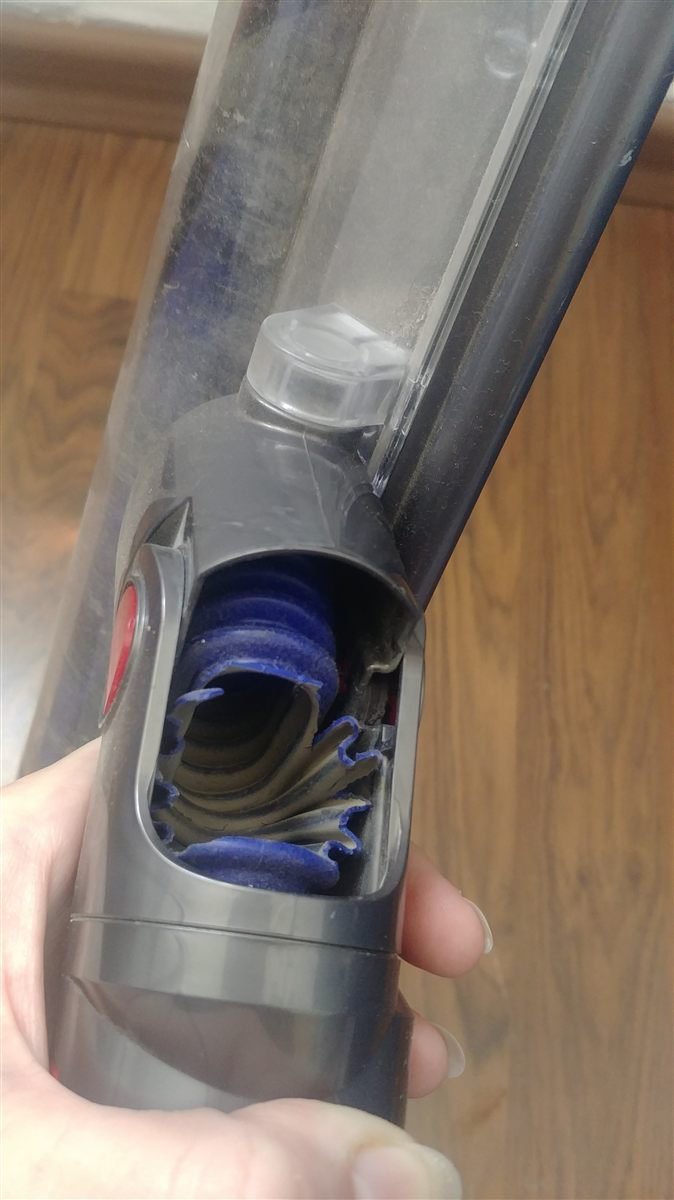
- Exposing the Engineering: While competitors used cheap, beige plastic bodies that hid the mechanical parts, Dyson used vibrant yellow, silver, and purple industrial plastics, exposing the cyclonic cones and air passages like an aircraft engine.
- Premium Pricing Architecture: Dyson priced its vacuums at three to four times the price of conventional models. The high price communicated superior British engineering, allowing Dyson to fund massive ongoing research and development in digital motors and battery chemistry.
The Expansion into Luxury Personal Care: The Supersonic
Having conquered the floor-care appliance sector, Dyson executed one of the most audacious category expansions in industrial design history: hair dryers.
For sixty years, consumer hair dryers were cheap, noisy twenty-dollar appliances that used large, clumsy motors placed in the barrel of the device, making them top-heavy and prone to burning hair with uncontrolled heat elements.
Dyson invested seventy million dollars in hair science research, developing a miniaturized V9 digital motor small enough to fit inside the handle of the dryer.
When Dyson launched the Supersonic Hair Dryer in 2016 priced at four hundred dollars (twenty times the price of a standard hair dryer), industry critics predicted immediate failure. Instead, it became an instant global sellout, embraced by celebrity hair stylists and luxury consumers who appreciated its balance, quiet acoustic pitch, and intelligent heat-control sensors. Dyson proved that uncompromising engineering can command luxury pricing in any domestic category.
The Sonic Engineering of Household Appliances
When James Dyson and his acoustic engineers developed high-speed digital motors spinning at over one hundred and ten thousand revolutions per minute, they encountered a severe psycho-acoustic challenge: high RPM motors generate a piercing, high-pitched whine that irritates human ears.
Dyson did not simply pad the motor with cheap foam insulation. They added extra blades to the axial flow impeller, tuning the dominant frequency of the motor up beyond the range of human hearing into the ultrasonic spectrum.
The machine sounded like a muted jet engine rather than a rattling plastic appliance. This acoustic refinement gave Dyson hardware an undeniable aura of precision aerospace craftsmanship, reinforcing its premium price tag.
Key Business Takeaways
- Make the Invisible Value Visible: If your product performs a service that is hard to verify, design a mechanism that displays clear, visible proof of efficacy to the user.
- Never Protect an Outdated Aftermarket Model: Incumbents failed to stop Dyson because they were terrified of cannibalizing their paper bag sales. Protecting old revenue streams blinds you to disruptive consumer shifts.
- Industrial Design Is Marketing: Exposing the authentic engineering mechanics of your product creates a sense of high-performance luxury that cosmetic styling can never match.