
If you ask an automotive journalist to evaluate the Indian car market, they will show you comparison spec sheets. They will praise Hyundai for its panoramic sunroofs and ventilated seats, praise Tata Motors for its five-star crash safety ratings, and praise Volkswagen for its German high-speed chassis engineering.
On paper, Maruti Suzuki's bestselling hatchbacks (the Swift, Wagon R, and Baleno) often have thinner sheet metal, fewer luxury electronic gadgets, and conservative interior styling.
Yet month after month, decade after decade, Maruti Suzuki sells more than forty percent of all passenger cars in India. Seven of the top ten bestselling cars in the country consistently carry the Suzuki badge.
Why do millions of practical Indian families continue to choose Maruti Suzuki over technologically advanced competitors?
Because in the physical reality of India, people do not buy a car based on what it looks like in a showroom. They buy a car based on what happens when it breaks down two hundred kilometers away from home on a rainy night.
The Ubiquitous Service Network
India has some of the toughest driving conditions on earth: monsoon floods, unpaved village roads, unpredictable potholes, and intense summer heat.
When an Indian car owner faces mechanical trouble, they do not want to wait three weeks for a replacement headlight to be shipped from Seoul or Munich.
Maruti Suzuki built an unrivaled service grid across the subcontinent:
The Unmatched Service Grid
- Over four thousand authorized service workshops covering more than two thousand towns and cities.
- High-altitude mountain service stations on the world's highest motorable passes in Leh and Ladakh.
- Mobile service vans that travel to remote rural villages to perform routine oil changes and filter replacements at the customer's doorstep.
More importantly, Maruti's engineering simplicity means that virtually every independent roadside mechanic in India knows how to fix a Suzuki engine with a basic wrench.
If your fan belt snaps in a tiny village in Bihar at 8:00 PM, a local mechanic can replace it in twenty minutes for five hundred rupees. If the same thing happens in a complex European car, you have to hire an interstate flatbed tow truck to take the vehicle to a capital city dealership.
The Supply Chain Localization Triumph
When Suzuki partnered with the Government of India in 1982 to create Maruti Udyog, Osamu Suzuki made a crucial strategic demand: local component manufacturing.
Instead of importing expensive components from Japan, Suzuki sent engineers to mentor local Indian entrepreneurs in Haryana and Delhi. They helped build Tier-1 automotive suppliers (like Sona Koyo, Subros, and Denso India) directly around the Gurgaon factory gates.
This strict localization reduced the cost of spare parts to a fraction of imported European equivalents. A replacement side-view mirror for a Maruti Swift costs eight hundred rupees. The equivalent mirror for a Volkswagen Polo costs five thousand rupees.
For an Indian family managing a monthly household budget, that five-fold difference in maintenance cost is the deciding factor in vehicle choice.
The Resale Value Anchor: Cars as Liquid Assets
For an Indian middle-class family, buying a car is the second-largest financial investment of their lives, after buying a home.
Because Maruti Suzuki cars are famous for cheap spare parts, reliable fuel efficiency, and easy repairs, they hold their resale value better than almost any other vehicle brand in India.
A customer knows that if they buy an Alto or a Swift for six lakh rupees today, they can drive it for five years, put eighty thousand kilometers on the odometer, and sell it in twenty-four hours in the used car market for four lakh rupees.
This resale value acts as a massive psychological safety net. It removes buyer hesitation because the customer knows their capital is safe.
The Kitna Deti Hai Mindset: Mileage as a Cultural Value
In the late 1990s, Maruti launched a television commercial that captured the soul of the Indian consumer.
A wealthy man shows off a luxury yacht, an expensive corporate jet, and a high-speed sports car. At every stage, a typical middle-class Indian onlooker asks one simple question: "Lekin yeh kitna deti hai?" (How much mileage does it give?).
Fuel efficiency in India is not just an economic preference; it is a moral virtue. Wasting fuel feels wasteful and irresponsible.
Maruti engineered its lightweight K-series engines to deliver over twenty to twenty-five kilometers per liter in real city stop-and-go traffic. While competitors offered heavier, safer steel frames that delivered twelve kilometers per liter, Maruti delivered double the distance on every liter of petrol. That mileage gap saves a family thousands of rupees every month.
Lessons for Everyday Business Owners
- Post-Purchase Support Is Your Strongest Sales Argument: The customer journey does not end when the invoice is paid. If your customer knows that getting help, repairs, and service will be fast and painless, they will choose you over a fancier competitor.
- Keep the Maintenance Cost Honest: If your product is cheap to buy but expensive to fix, customers will feel tricked and tell all their friends never to buy from you. Cheap, transparent maintenance creates generational repeat buyers.
- Peace of Mind Beats Vanity Features: Shiny touchscreens and fancy marketing promises fade quickly. An unshakeable reputation for dependability and peace of mind lasts for decades.
The Unassailable Distribution Advantage of Four Thousand Workshops
When global automotive powerhouses like General Motors, Ford, Fiat, and Peugeot entered the Indian automotive market in the 1990s and 2000s, they brought modern automotive engineering, superior safety features, and European interior styling. Yet one by one, Ford and General Motors accumulated billions in losses and eventually shut down their Indian factory operations.
They failed because they did not understand that an Indian car purchase is an eighty-thousand-kilometer relationship with a service workshop. Maruti Suzuki built over four thousand authorized service workshops reaching into high-altitude mountain passes in Ladakh and remote villages in Kerala.
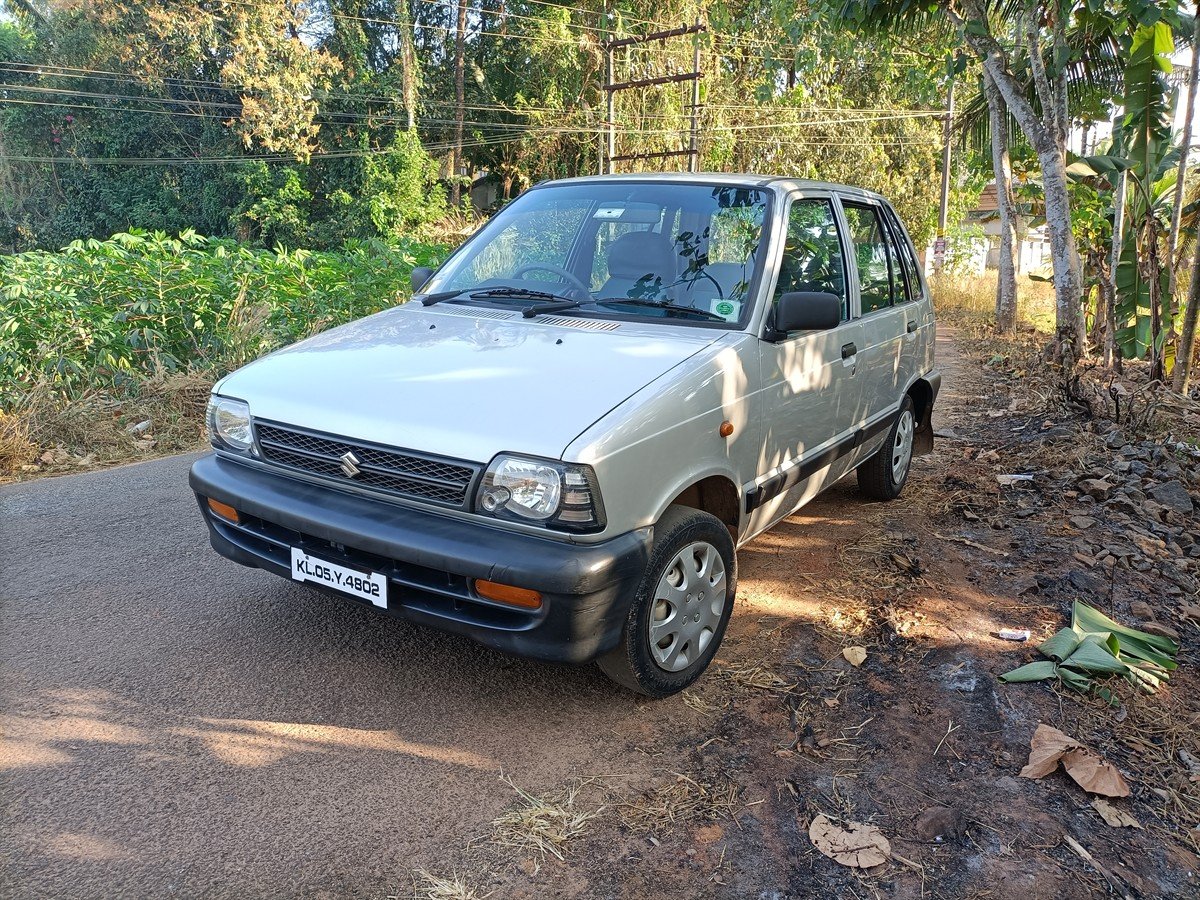
If a Maruti 800 or Alto broke a fan belt or cracked an axle in a rural ditch, a local village mechanic had genuine spare parts in stock and fixed the car in two hours for three hundred rupees. If a Ford or Chevrolet broke down, the owner had to wait three weeks for a replacement component to be shipped from Chennai at five times the cost.
Maruti did not win India on horsepower, styling, or crash-test ratings; they won India on service availability. Because buyers knew their car could be repaired anywhere in the country for pocket change, Maruti retained fifty percent market share for forty consecutive years.