
In the late 1990s, the Indian two-wheeler landscape underwent a quiet, brutal technological revolution. Japanese giants like Honda, Yamaha, and Suzuki formed joint ventures with Indian manufacturers (Hero Honda, TVS Suzuki, and Bajaj Auto) to flood the country with lightweight, ultra-reliable, fuel-efficient 100cc commuter motorcycles.
Commuters lined up by the millions to buy machines that delivered seventy kilometers per liter, never broke down, and started with the gentle touch of a thumb on an electric ignition button.
Standing in pathetic contrast was Royal Enfield.
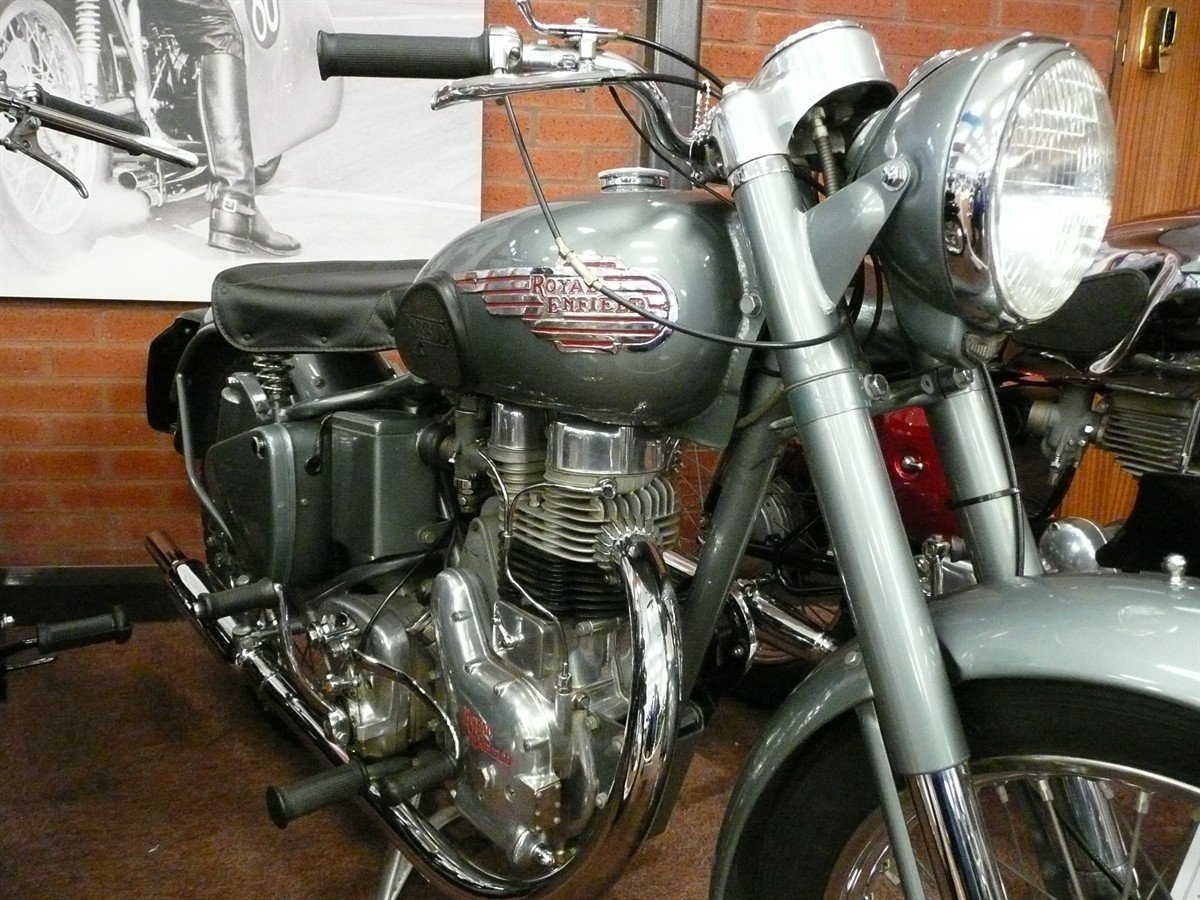
Founded in Redditch, Worcestershire, in 1901, Royal Enfield had been manufacturing motorcycles for the Indian Army and police force in Madras since 1955. But by the year 2000, the company was a mechanical embarrassment. Its flagship Bullet 350 was a heavy, cast-iron dinosaur. Its four-speed gearbox shifted on the right foot (the opposite of every modern bike in the world), its neutral lever was notoriously finicky, its electrical wiring shorted out in the monsoon, and it leaked engine oil on showroom floors before customer delivery.
Royal Enfield was selling barely two thousand motorcycles a month. The company was losing twenty crore rupees a year on fifty-two crores in revenue. At the board meetings of Eicher Motors, the commercial conglomerate that owned the brand, senior directors unanimously recommended selling the business or shutting down the Thiruvottiyur factory for scrap.
Then, a twenty-six-year-old scion named Siddhartha Lal stood up and made an audacious proposition: give him full operational control of Royal Enfield for two years. If he could not make it profitable, he would shut it down himself.
Over the following two decades, Siddhartha Lal orchestrated one of the most miraculous turnarounds in corporate history. Royal Enfield expanded production from two thousand units a month to nearly one million motorcycles a year, delivered operating margins exceeding thirty percent, and made Eicher Motors one of the greatest wealth-creating stocks in Indian market history.
Here is the forensic breakdown of how Lal accomplished this resurrection.
The Divestment Crucible: Cutting Thirteen Limbs to Save the Heart
When Siddhartha Lal took over Eicher Group, the conglomerate was spread thin across fifteen disparate business lines: tractors, commercial trucks, automotive components, management consultancy, garments, and leather exports. Most of these divisions were mediocre performers with negligible market share.
Lal applied a ruthless first-principles test to every single division in the Eicher portfolio: Can this business become a global leader, or is it destined to remain a fragmented domestic follower?
Tractors could not beat Mahindra & Mahindra. Garments could not compete with low-cost Southeast Asian manufacturing.
Lal made the painful, courageous decision to divest thirteen businesses. Eicher sold its tractor division, exited footwear, closed consultancy ventures, and focused ninety percent of its executive attention and capital on two core engines: commercial trucks (through a fifty-fifty joint venture with Volvo) and Royal Enfield.
By eliminating corporate distractions, Lal gave Royal Enfield the singular resource it lacked for three decades: complete managerial focus.
The Heritage Dilemma: Soul vs Reliability
When modern automotive engineers are tasked with updating an old vehicle, their instinctive bias is to erase the past. They install aerodynamic plastic fairings, swap analog needles for digital screens, and tune the engine for maximum horsepower and top speed.
Lal realized that if Royal Enfield attempted to compete with Honda, Yamaha, or Bajaj on horsepower, top speed, and fuel economy, it would commit corporate suicide. A 350cc Royal Enfield could never match a Japanese motorcycle on technical spec sheets.
What Royal Enfield possessed was something Japanese engineers could never manufacture in a laboratory: one hundred years of military heritage, visceral metal substance, and an unmistakable cultural soul.
The Unit Construction Engine (UCE) Breakthrough
- The Sacred Thump: The heartbeat of Royal Enfield was its low-RPM acoustic exhaust note: the legendary "thump" (dug-dug-dug). Riders in Punjab, Rajasthan, and Kerala identified the bike by sound two miles before it turned the corner. If modern engineering silenced the thump, the brand would die instantly.
- The Elimination of Leaks: The old cast-iron engine had separate castings for the engine block, clutch, and gearbox, connected by external oil lines that routinely loosened and leaked. Lal's engineering team spent five years developing the Unit Construction Engine (UCE), integrating the engine, gearbox, and clutch into a single modern aluminum casting.
- Retaining the Hand-Painted Pin-Stripes: While manufacturing automation was introduced for robotics welding and precision machining, Lal insisted that the signature gold tank pin-stripes (the Madras stripes) continue to be painted by hand by generational artisans in Chennai with squirrel-hair brushes.
By preserving the tactile soul of the motorcycle while curing its chronic reliability defects, Lal gave Indian men an excuse to buy the bike they secretly loved without the fear of spending their Sunday mornings stranded on the shoulder of the highway.
The Cult of Non-Conformity: Leaving the Commuter Rat Race
In the early 2000s, all motorcycle advertising in India looked identical. A young executive in a white shirt and tie rode through city traffic to impress his boss, save money on fuel, and arrive on time at an air-conditioned corporate cubicle.
Royal Enfield completely rejected commuter positioning.
Royal Enfield did not sell transportation; it sold escape.
Its advertising featured lone riders cruising along snow-capped Himalayan ridges, traversing the golden dunes of Leh-Ladakh, and camping beneath starlit desert skies. The copy was unapologetic, philosophical, and masculine: "Trip. Trip. Trip." and "Made Like a Gun."
While commuter motorcycles were positioned as practical tools for corporate servitude, Royal Enfield was positioned as a sovereign weapon of personal liberation.
Lal also understood that community is the ultimate advantage. Royal Enfield institutionalized the Himalayan Odyssey and Rider Mania: annual gatherings where thousands of Bullet owners rode cross-country across high-altitude mountain passes to celebrate camaraderie and mechanical grit.
A customer who spends ten days riding through frozen river crossings with a group of fellow Enfield owners is not an automotive consumer; they are an initiated member of a tribal brotherhood. They will never sell their bike to buy a Honda.
The Classic 350 Tipping Point
In 2009, Royal Enfield launched the Classic 350 and Classic 500.
The Classic blended 1950s post-war British styling (sprung single saddles, round headlamp nacelles, teardrop fuel tanks, and vintage military colorways) with the reliable new UCE engine.
The launch triggered a consumer mania unprecedented in modern Indian commerce:
- The Waiting List advantage: Waiting periods for a Classic 350 stretched from three months to six months, and in some cities to twelve months. Lal refused to flood the market with low-quality rushed inventory. The waiting list became its own psychological marketing campaign: the longer a man had to wait for his Royal Enfield, the more valuable it became in the eyes of his peers.
- The Premium Pricing Power: While 100cc commuter bikes sold for forty thousand rupees, Royal Enfield charged one lakh twenty thousand rupees for the Classic 350. Because customers viewed the motorcycle as an aspirational lifestyle asset rather than a utility vehicle, price sensitivity was virtually non-existent.
- Operating Margins of a Software Company: Because Royal Enfield spent virtually nothing on traditional television commercials and commanded high gross margins on every unit sold, Eicher Motors' operating margins exceeded thirty percent: rivaling Apple and Porsche.
First Principles for Brand Turnarounds
The resurrection of Royal Enfield offers four critical lessons for leaders attempting to revitalize legacy assets:
- Never Compete on Your Competitor's Strongest Metric: If your competitor dominates on fuel efficiency, software features, and mass distribution, do not attempt to beat them at their own game. Pivot the battleground to heritage, emotion, weight, and soul.
- Ruthless Divestment Unlocks Capital Velocity: A company with fifteen mediocre divisions will lose to fifteen focused competitors. Cut your unprofitable and uninspired business lines to channel maximum energy into your single crown jewel.
- Cure the Defect, Keep the Character: When modernizing a classic product, identify the exact physical elements that create emotional attachment (sound, texture, visual proportions) and protect them with your life. Fix the plumbing, but leave the architecture intact.
- Transform Product Owners into an Army of Evangelists: When your customers spend their vacation time organizing rides, tattooing your logo on their forearms, and maintaining independent community forums, your customer acquisition cost drops to zero. Brand community is the only marketing expenditure that compounds perpetually.